Home

/

/

316 Stainless Steel Sheet

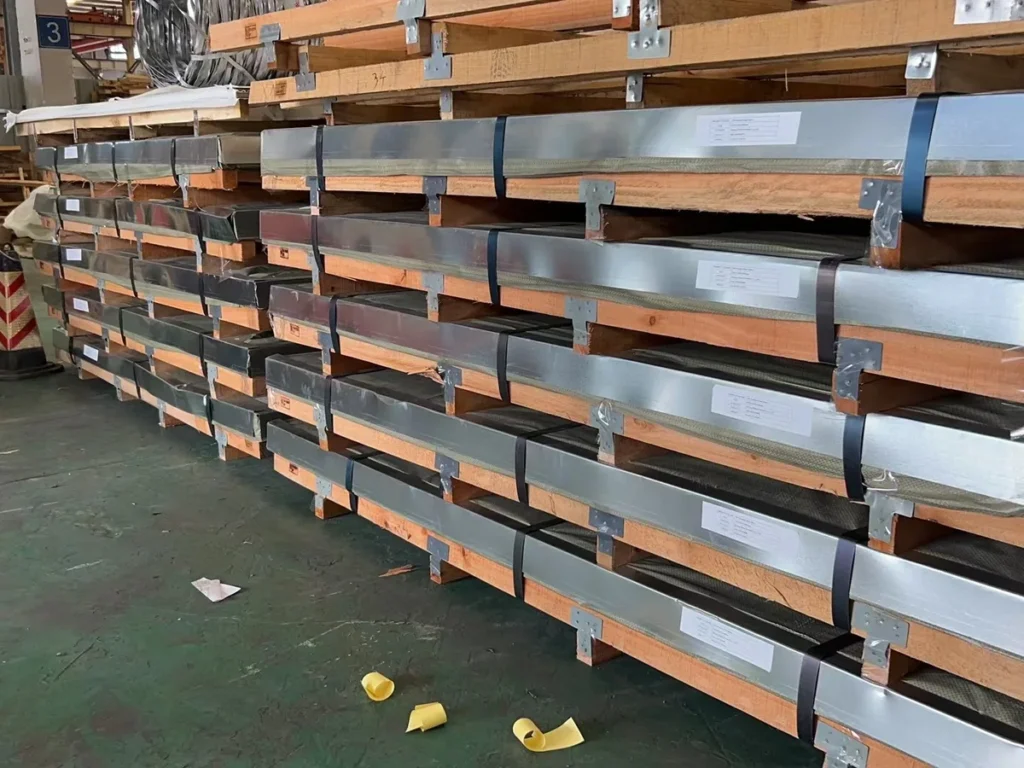
Stack of 316 stainless steel sheets in our Wuxi warehouse

316 Stainless Steel Sheet Supplier

316 and 316L stainless steel sheet metal, cold rolled from 0.27mm to 6mm thick, for marine, coastal and chemical service. Supplied in 2B, BA and No.4 finishes, in stock sizes or cut to your length on our own lines.

Cut to length in-house up to 6000mm; No.4, HL and 8K mirror finished on our own lines

Molybdenum of 2.0–3.0% on every certificate, per ASTM A240

316/316L dual-certified sheet for welded parts

Stock sizes 1219×2438mm and 1500×3000mm, shipped from Wuxi in 8–12 working days

Why Source 316 Sheet From MTS


01

Cut and Finished on Our Own Lines

Our 20 cut-to-length lines cut 316 coil into sheets in your length, up to 6000mm. No.4, hairline and 8K mirror finishes are done on our own lines, up to 2000mm wide. Laser film goes on before cutting and stays on through laser cutting and bending.

02

Finishes Chosen for Corrosion, Not Just Looks

On coastal and marine jobs, a smoother surface holds less salt. We supply 2B, BA and fine No.4, with Ra values on request. You choose the surface that will last on your site.

03

One Batch per Project

For cladding and handrail projects, we cut all sheets from the same batch where possible, and brush them on the same line. Color and grain stay consistent across the building.

04

Processed and Shipped From Wuxi

We process up to 100,000 tons a month and hold 4,500 tons of stainless sheet and plate (out of 80,000 tons in total) in our Wuxi warehouses, which cover 60,000 m². Our own cranes load each container for Shanghai, Qingdao or Tianjin.
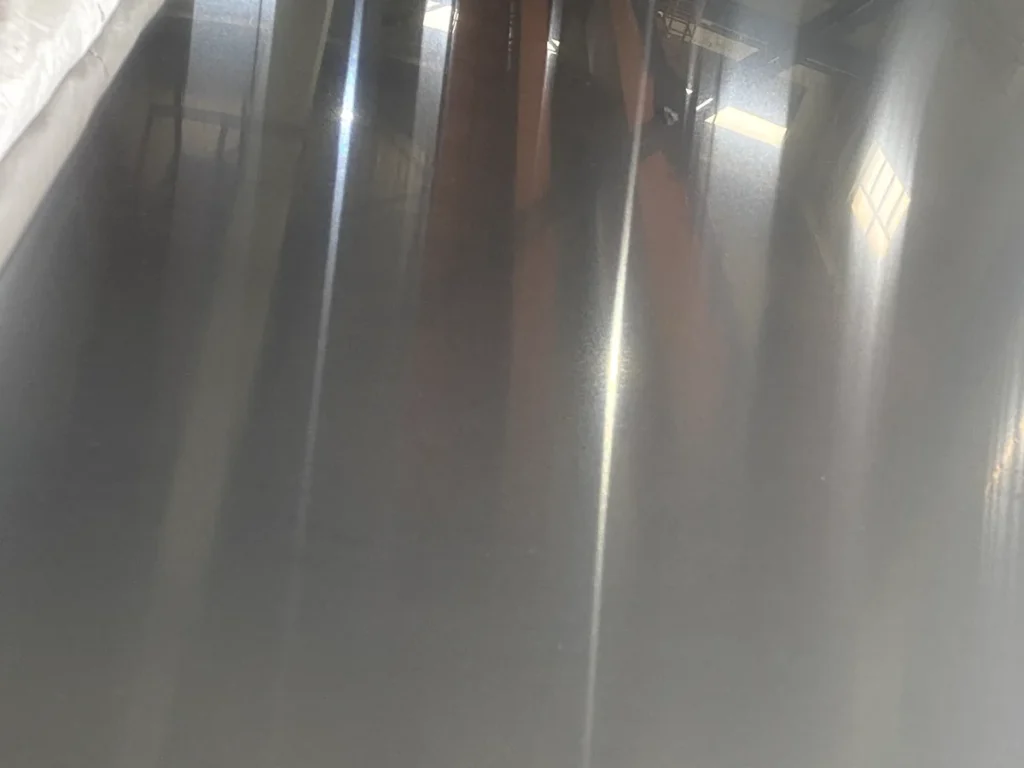
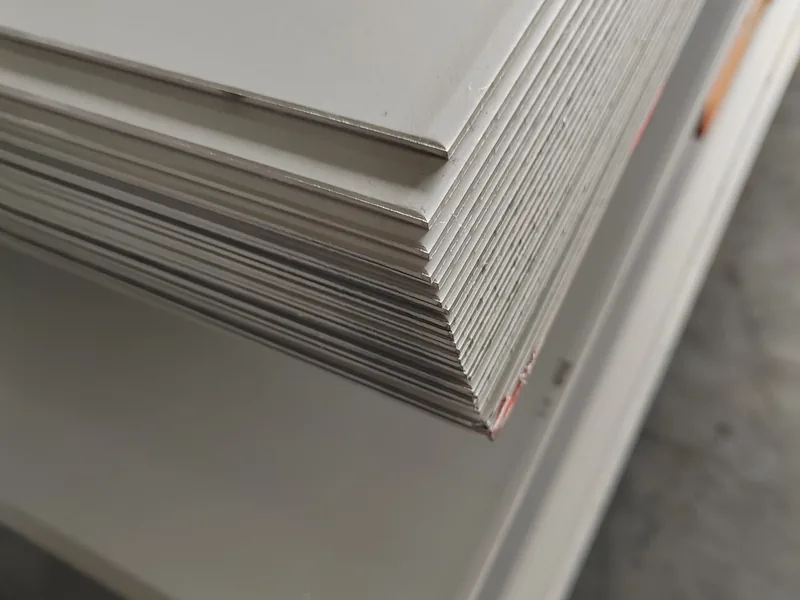
Surface of a 316 stainless steel sheet

316 Sheet for Places Where 304 Rusts

Salt is the reason most buyers move from 304 to 316. Sea air, de-icing salt, pool water and brine all carry chlorides. Chlorides break the passive film on 304 and leave pits and tea stains.

316 adds 2–3% molybdenum. That makes the passive film much harder for chlorides to break. On a seaside railing or a boat fitting, the difference shows within one season.

That is why the molybdenum value on the mill certificate matters. A low-moly sheet costs the same to ship, but fails like 304.

Request a Quote

316 Stainless Steel Sheet Types


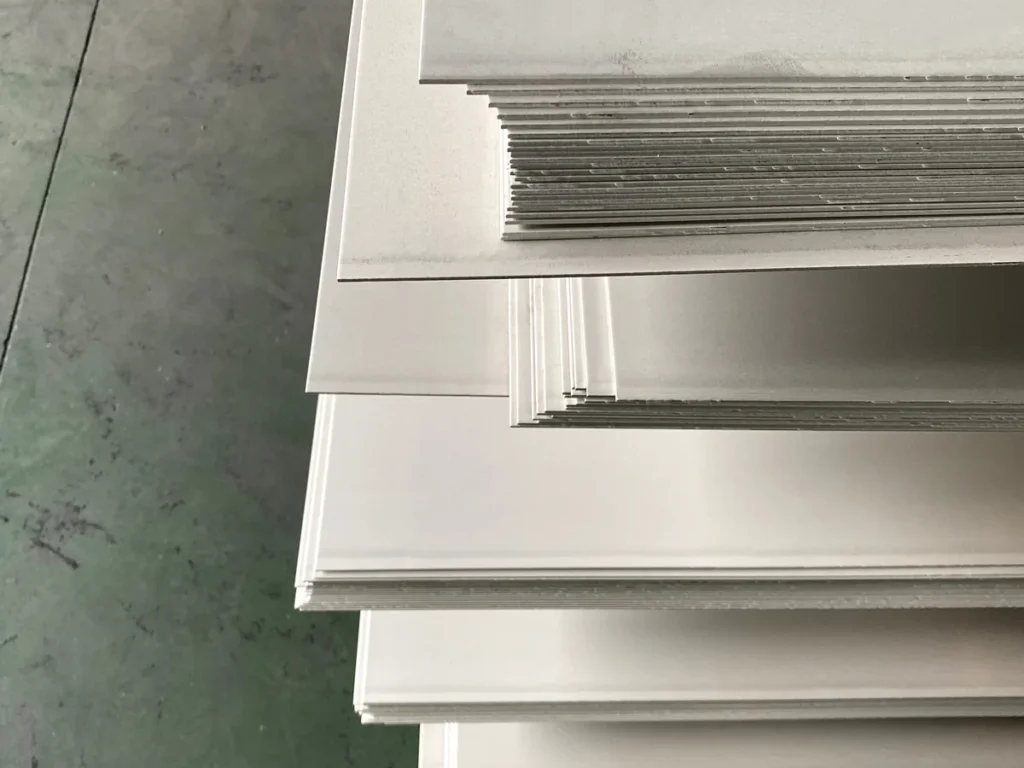
316 stainless steel sheets stacked edge to edge

316 Sheet

The standard molybdenum grade for marine fittings, coastal architecture and chemical equipment. Example: 316 2B sheet, 1.5mm, 1219×2438mm.
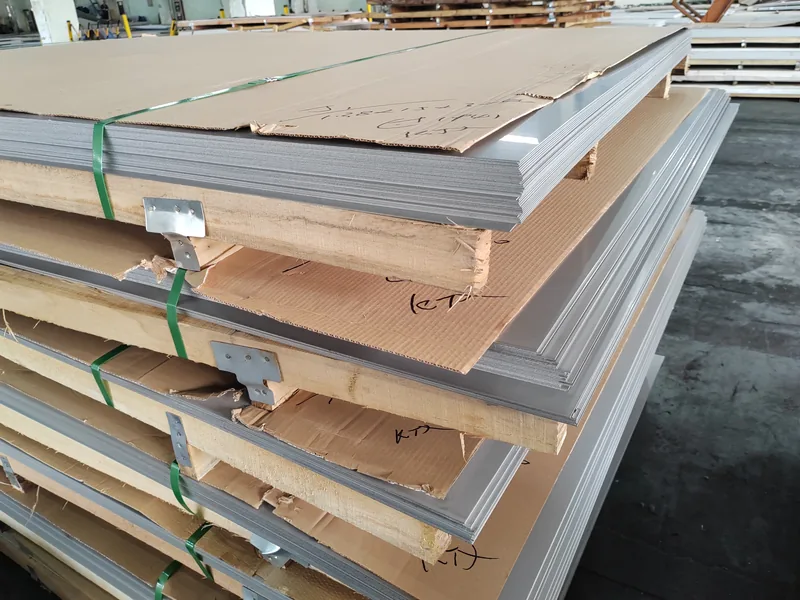
316L stainless steel sheets on pallets

316L Sheet

Low-carbon 316 for welded tanks, pipes and enclosures. Most stock is dual-certified 316/316L.
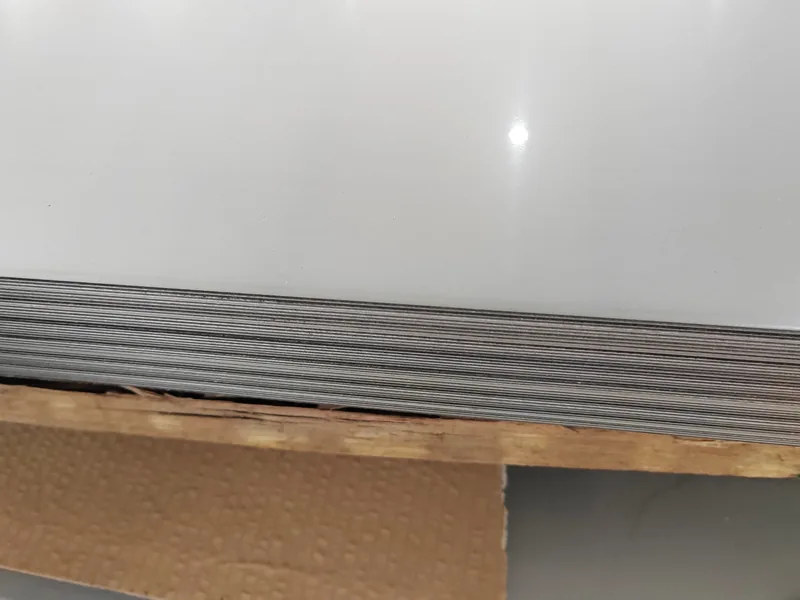
316Ti stainless steel sheet edge

316Ti Sheet

Titanium-stabilized 316 for parts that run hot after welding, such as exhaust and heat exchanger parts. Common in Europe as 1.4571.
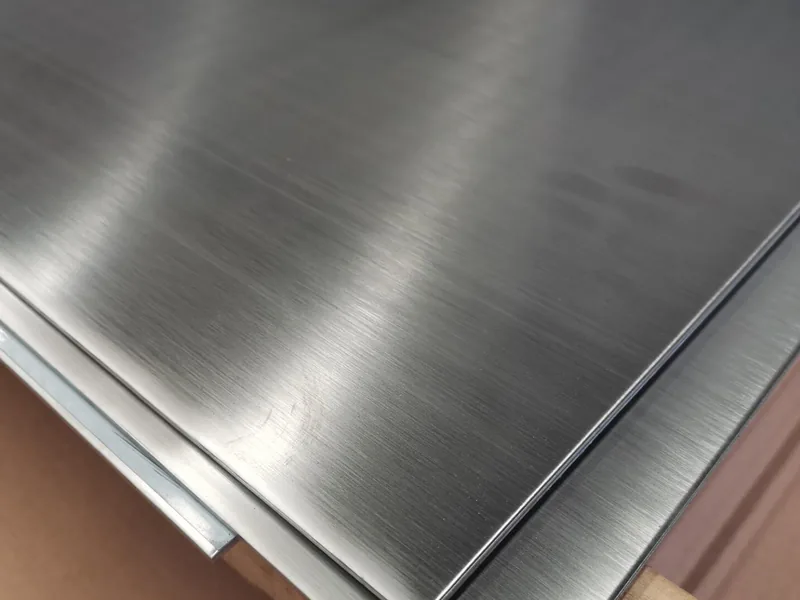
316 No.4 brushed stainless steel sheet

316 No.4 Brushed Sheet

Brushed finish for coastal handrails, marine panels and food plant walls. Ask for a fine grit for better salt resistance.
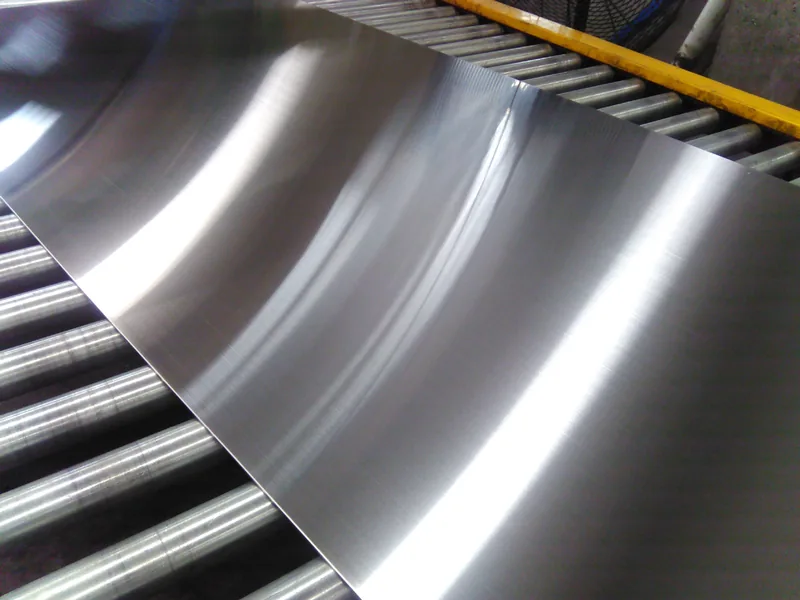
316 BA stainless steel sheet on a roller table

316 2B and BA Sheet

Smooth cold rolled finishes for pharmaceutical equipment, clean rooms and parts you will electropolish.

From 3 to 6mm, 316 comes both cold rolled and hot rolled. For hot rolled plate from 3mm, or 6mm and thicker, see our 316 Stainless Steel Plate.

316 Sheet Specifications


Item Range
Grades 316, 316L, 316/316L dual, 316Ti
Cold rolled sheet Thickness: 0.27–6.0mm
Width: 1000, 1219 (4 ft), 1500mm
Length: 2000, 2438 (8 ft), 3000mm standard; cut to any length up to 6000mm. Sheets over 6m are long sheets, made to order, with limited transport options
Hot rolled cut-to-length plate Thickness: 3.0–16mm standard, up to 20mm on request
Width: 1000, 1219, 1500, 1800, 2000mm
Length: 2000, 2438, 3000, 6000mm standard; cut to any length up to 12000mm
Hot rolled mill plate Thickness: 6–80mm (316, 316L, 316Ti)
Width: 1500, 1800, 2000, 2500, 3000, 3500mm; the thicker the plate, the wider it can be supplied
Length: 2000, 3000, 6000mm standard; 12000mm on request. Plates over 12m are rarely made, hard to ship in containers and only supplied as a special order
Finishes 2B, BA, No.4, HL, 8K
Standards ASTM A240, EN 10088-2 (1.4401 / 1.4404 / 1.4571), JIS G4305 (SUS316 / SUS316L), GB/T 3280

316 Stainless Steel Sheet: How to Choose, Check and Price It

316 costs more than 304 because of nickel and molybdenum. You pay that premium for chloride resistance. This guide explains when the premium is worth it, how to make sure you get it, and what 316 still cannot do.

What Makes 316 Different From 304

316 has 2–3% molybdenum and a little more nickel. Molybdenum is the key element. It raises resistance to pitting and crevice corrosion from chlorides.

Engineers compare grades with the PREN number. It is calculated from chromium, molybdenum and nitrogen. 304 scores about 18–20. 316 scores about 23–26. A higher number means better resistance to pitting in salty water.

In practice, choose 316 for coastal buildings within a few kilometers of the sea. Choose it for boat fittings above the waterline, swimming pools and food plants that use brine. For dry, inland, indoor use, 304 sheet is enough and saves money.

316 vs 316L Sheet

The only real difference is carbon. 316L has at most 0.030% carbon, against 0.08% for 316.

Low carbon matters when you weld. It stops chromium carbides forming next to the weld. Those carbides make the weld zone corrode first. For welded tanks, ducts and enclosures, choose 316L.

For thin sheet that is cut, bent and bolted, 316 and 316L perform the same. Most mills now dual-certify, so one sheet meets both. Ask for dual certification and you avoid the question entirely.

AISI 316, SS316, A4 and Other Names

AISI 316 is the American name, and UNS S31600 is the ASTM designation. SS316 is common trade shorthand. SUS316 is the Japanese name. EN 1.4401 is the European 316, and 1.4404 is 316L.

A4 stainless steel sheet usually means the 316 family. The A4 label comes from ISO 3506 for stainless fasteners. European buyers often use it for any 316-type material. Note that EN 1.4401 limits molybdenum to 2.0–2.5%. If your drawing says A4, confirm the exact grade and standard before you order.

Some searches for “A4 sheet” mean paper size, not steel. If your inquiry says A4, we will check which one you mean.

How to Check You Received Real 316

Low-moly 316 is the most common problem in this grade. The sheet looks the same as 304. It even passes a magnet test. Only chemistry tells the difference.

First, read the mill certificate. Molybdenum must be at least 2.00% under ASTM A240. Check that the certificate names the grade and standard you ordered.

For large orders, ask for third-party inspection at loading. It costs little compared with replacing a rusting facade.

Choose the Finish for Corrosion

Two 316 sheets of the same grade can last very differently on a seafront. The surface makes the difference. Rough surfaces trap salt and moisture. Smooth surfaces wash clean in rain.

For coastal work, many specifiers set a maximum surface roughness of about Ra 0.5 µm. 2B and BA meet that easily. Brushed finishes can meet it if the grit is fine and the brushing runs vertically.

Avoid coarse brushing near the sea. Plan regular washing of areas the rain does not reach.

What 316 Cannot Do

316 is not a seawater-immersion grade. Fully submerged in still seawater, it suffers crevice corrosion under gaskets and deposits. For immersed parts, look at duplex 2205, super duplex or 6% molybdenum grades.

316 also has limits in hot chloride solutions. Above about 60°C, it can suffer stress corrosion cracking. Duplex grades handle that better. Strong reducing acids, such as hot hydrochloric acid, attack 316 as well.

Telling you this up front saves a failed project later. If your part sits in one of these zones, send us the conditions. We will suggest a grade that fits.

Why 316 Price Moves Differently From 304

316 sheet price follows two metals, not one. Nickel matters, as for 304. Molybdenum adds a second, often more volatile cost.

When molybdenum prices jump, the gap between 316 and 304 widens.So 316 quotes carry a short validity date.

Frequently Asked Questions


What is the 316 SS sheet price per kg?

316 sheet costs more than 304, and the gap depends on nickel and molybdenum markets. Thickness, finish and quantity also change the price per kg. Send us your grade, thickness, finish and tonnage. We will quote a current price per kg within 2–4 working hours.

Can you quote the SS316 sheet price today?

Yes. We quote on the day's price. Because molybdenum prices move quickly, our 316 quotes are valid for 3 days. Confirm your order within that window to lock the price.

Is 316 stainless steel sheet magnetic?

Annealed 316 sheet is non-magnetic. Cold forming can make bent edges very slightly magnetic. 316 is usually less affected than 304 because of its higher nickel. A strong pull on a magnet means the sheet is likely a different grade.

Is AISI 316 the same as 316L?

Not exactly. AISI 316 allows up to 0.08% carbon. 316L limits carbon to 0.030%. Most sheet today is dual-certified, meeting both. If you will weld the sheet, ask for 316L or dual-certified 316/316L.

Is A4 stainless steel sheet the same as 316?

Usually, yes. A4 is the ISO 3506 name for the 316 family, mostly used for fasteners. Some A4 material follows EN 1.4401 or 1.4404, with slightly different limits. State the exact grade and standard in your order.

Which 316 sheet finish is best near the sea?

Choose a smooth finish such as 2B, BA or a fine No.4 brushed vertically. Smooth surfaces hold less salt and wash clean in rain. Coarse brushed finishes trap salt and tea-stain faster, even on 316.

Related Products

Request a Quote

We reply within 2–4 working hours with a price per ton, valid for 3 days.

Scroll to Top

Send Your Inquiry Today

Send us your required grade, size, quantity and destination port. For standard products, we will provide a quote within 2–4 working hours.