
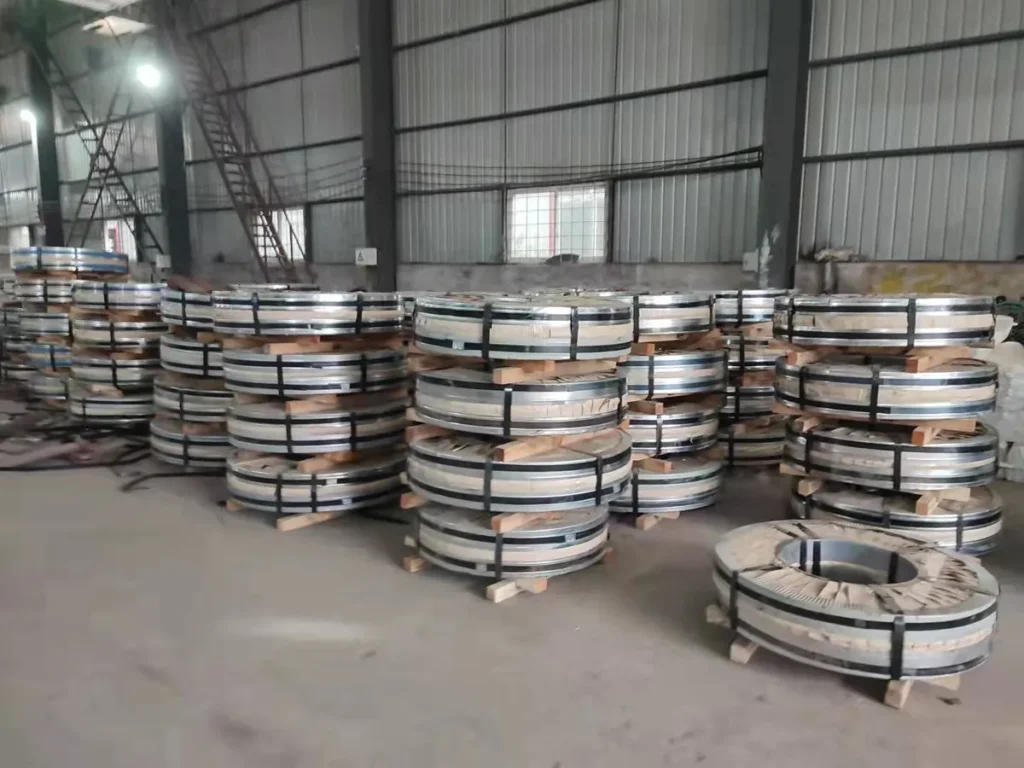
Thin Stainless Steel Strips
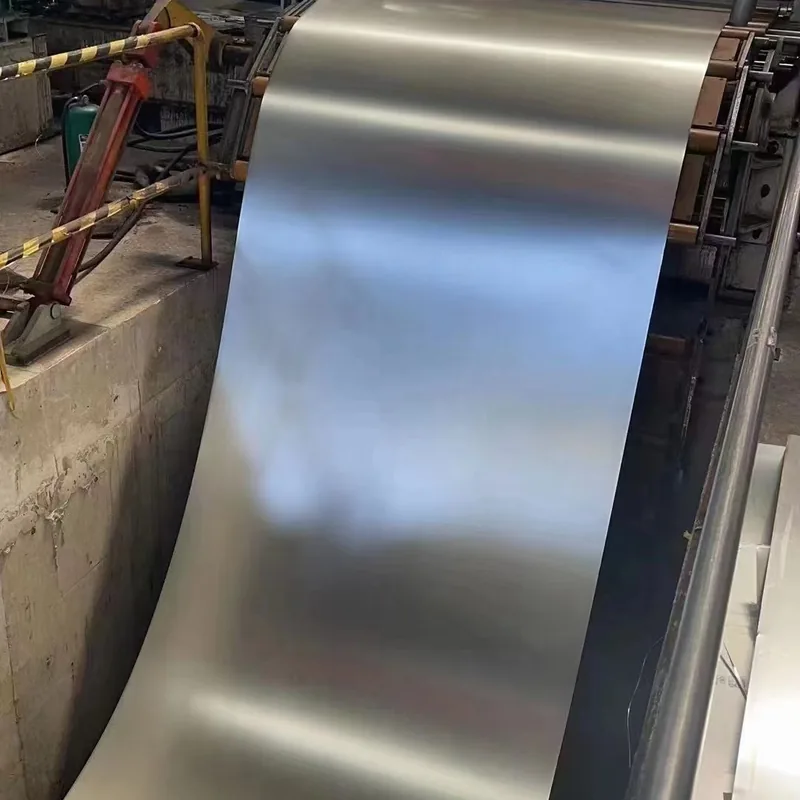
Precision rolled, annealed and slit on our own lines in Wuxi, from 0.27mm to 0.5mm (thinner gauges by a second cold rolling) thick and 20 to 400mm wide. Bright annealed, 2B or hard rolled, in 304, 316L, 301 and 430.

Thickness measured continuously along the coil, with the log available on request
Coils recoiled to your line; small coils for prototypes and pilot runs
Base coil from our long-term mill partners TISCO, Tsingshan, Baowu, POSCO, JISCO, Hongwang, ZPSS, Delong and Yongjin
Why Buy Thin Strip From MTS
01
Microns, Not Fractions of a Millimeter
On 0.05mm strip, a 0.005mm error is 10% of the thickness. We quote thin strip with a tolerance in microns, and check it after every processing step.
02
Flat Enough to Feed
Thin strip shows edge wave and center buckle more than thick strip. We tension level before slitting, so the strip feeds flat into your die.
03
Surface Without Roll Marks
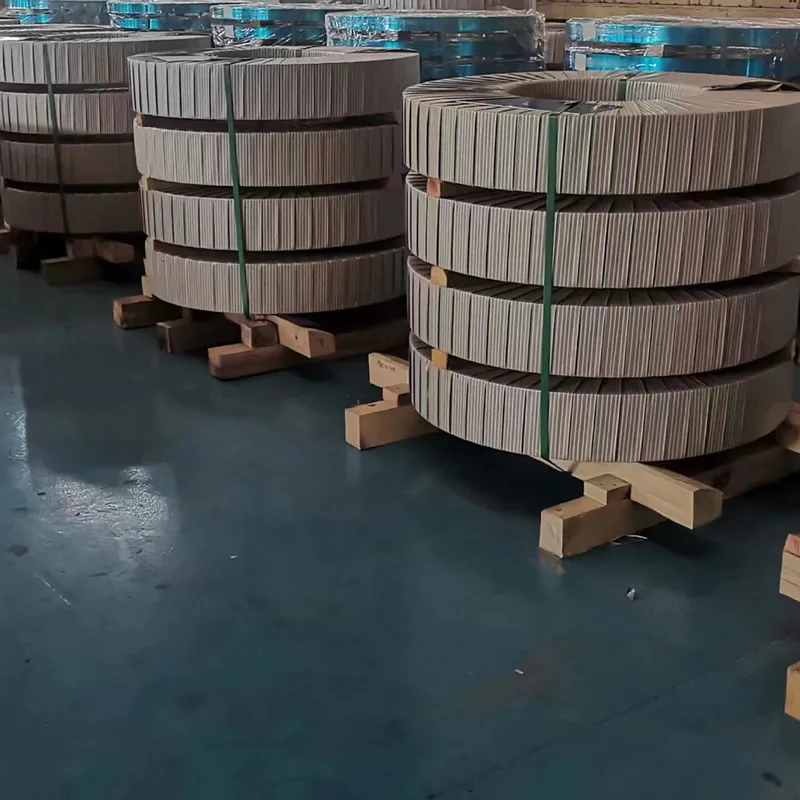
Bright annealed strip is inspected on both sides for roll marks, scratches and stains. Paper interleaving protects the surface in the coil.
04
Small Coils, Long Coils
Our 7 recoiling lines split master coils to the weight your line can take, on 508 or 610mm ID. Small prototype coils. Production lots can come oscillate wound on spools, so your line stops less often.
05
Slit to Order, Shipped on Time
We slit and recoil thin strip on our own lines, from base coil held in our Wuxi warehouses. Lead time is 8–12 working days. Our own cranes load each container, and orders ship from Shanghai, Qingdao or Tianjin.

Thin Strip Behaves Differently From Standard Strip
Request a QuoteThin Stainless Strip by Thickness
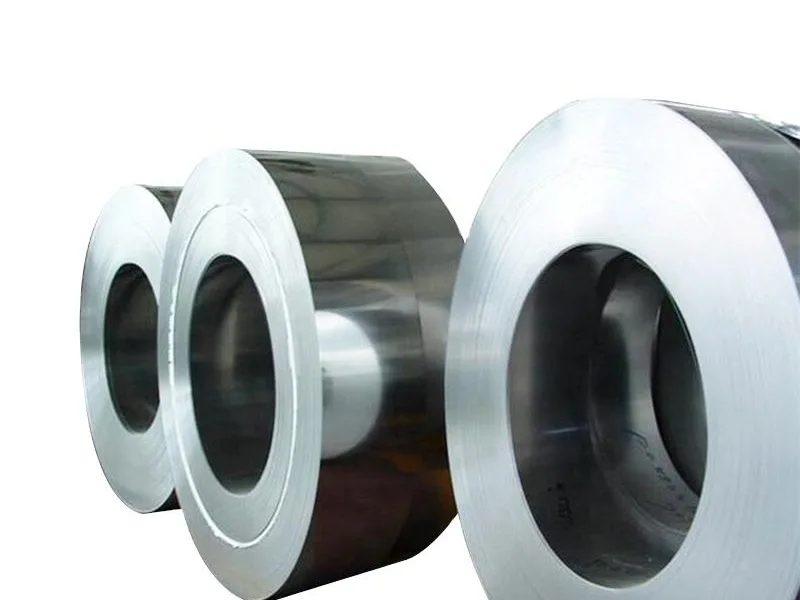
Foil Gauge: 0.02–0.05mm
Used for shielding, flexible circuits, battery tabs and laminated parts. Usually 304 or 316L, bright annealed or full hard. Made to order in most widths.
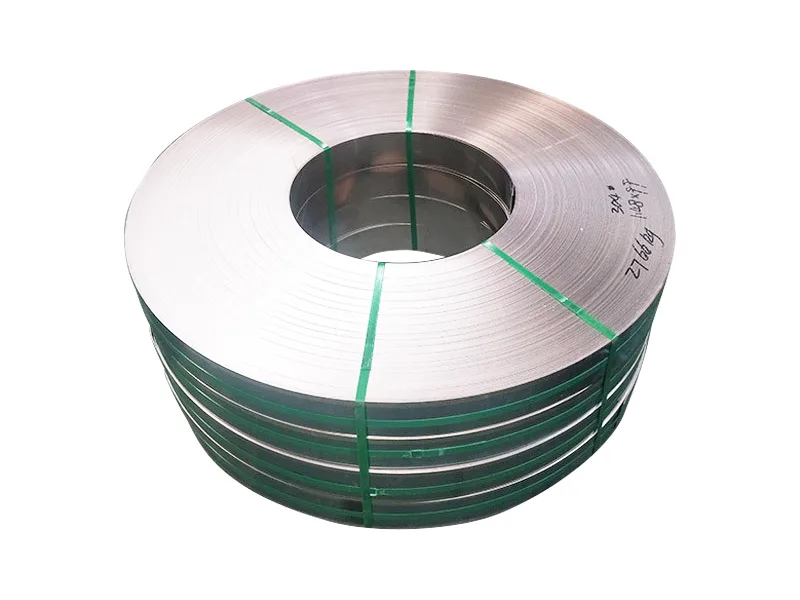
Shim Gauge: 0.05–0.2mm
Used for shims, gaskets, diaphragms and small contacts. Thickness consistency matters more than surface here. Example: 304 bright annealed, 0.1mm × 50mm, in coil.
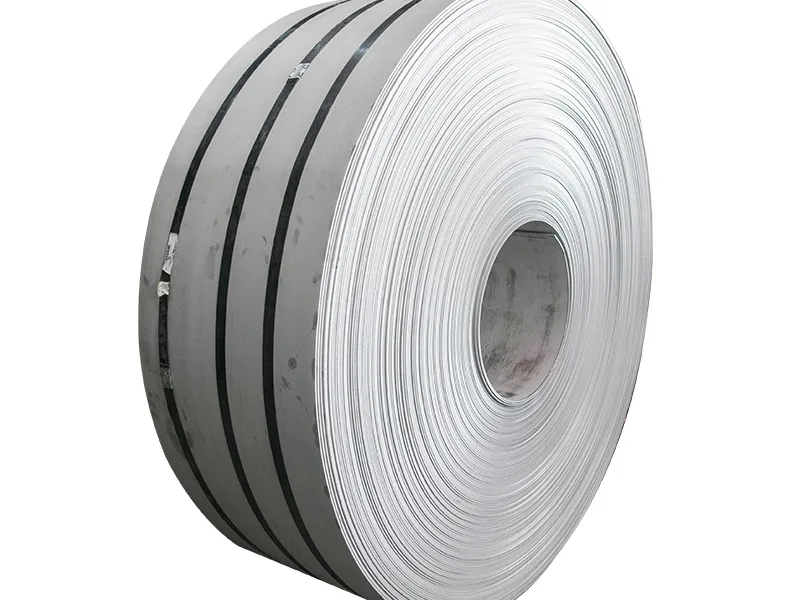
Light Gauge: 0.2–0.5mm
Used for flexible hose, bellows, small stampings and clamps. The most common range for precision stamping lines. Hard tempers are available for spring parts, see Spring Stainless Steel Strip.
Thin Stainless Strip by Grade
304 Thin Strip
The general choice for electronics, shims and stamped parts. Bright annealed 304 is soft, clean and easy to form.
316L Thin Strip
For medical parts, marine sensors and gaskets that see chlorides. Lower carbon helps when parts are welded.
301 Thin Strip
Rolled to hard tempers for thin springs, clips and contacts. Gains strength quickly with cold work.
430 Thin Strip
Magnetic and nickel-free. Used for magnetic shielding parts and low-cost indoor components.
Thin Strip Specifications
Buying Thin Stainless Steel Strips: What to Check Beyond Size
With thin strip, the size on the order is the easy part. Problems usually come from tolerance, shape, surface or packing. Here is what to agree before you buy.
Tolerance: Agree It in Numbers
Shape: Flatness and Camber
Surface: BA or 2B
Hardness: Soft or Hard
How Much Strip Is in a Kilogram
Joints and Coil Length
Packing for the Trip
Frequently Asked Questions
What is the thinnest stainless steel strip you can supply?
We supply stainless strip down to 0.05mm in 304 and 316L. Below about 0.05mm, widths and grades are more limited. Send your thickness and width, and we will confirm what can be supplied within 2–4 working hours.
Why does my thin strip have a curve along its length?
That curve is camber. It comes from uneven rolling or slitting. A small amount is normal and allowed by standard tolerance. If your process cannot handle it, agree a tighter camber limit before ordering.
Can you supply thin strip with no joints?
Yes, for coils up to a set length or weight. Longer coils may need joints. We mark every joint with a colored tag on the coil edge. Tell us your maximum allowed number of joints per coil.
Does thin stainless strip rust?
304 and 316L thin strip resist rust like thicker material. But iron dust from cutting tools can cause surface spots. Keep the strip in its packing until use, and store it dry.
Related Products
Request a Quote
We reply within 2–4 working hours with a price per ton, valid for 3 days.