
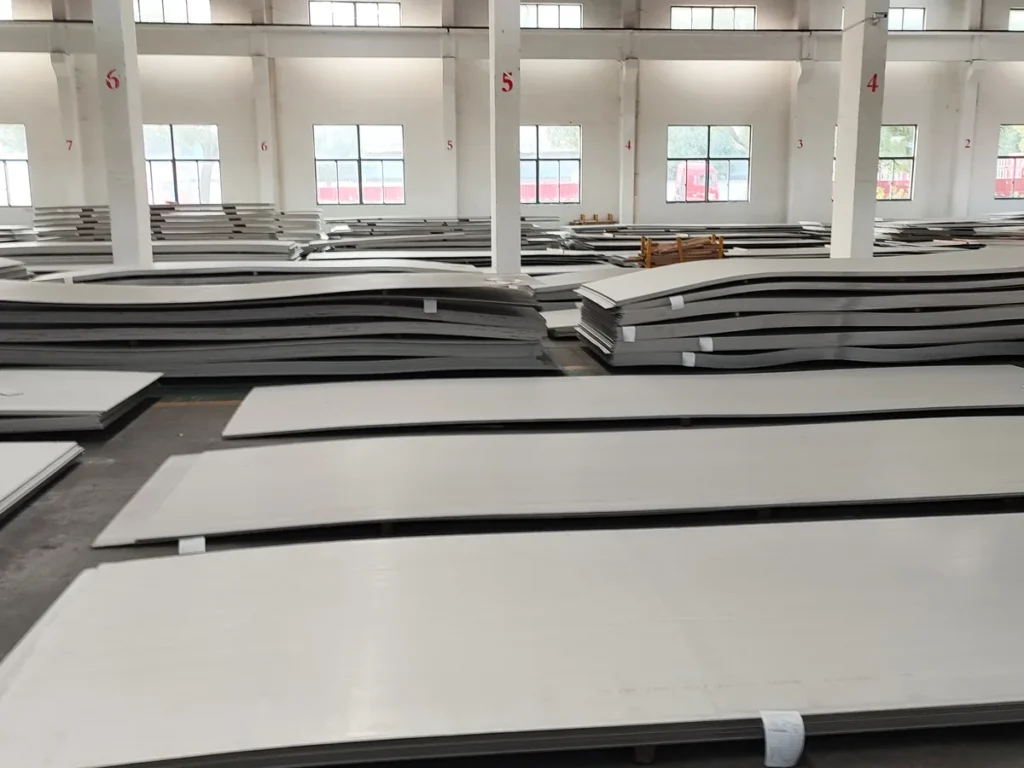
316 Stainless Steel Plate Supplier
Hot rolled 316/316L and 316Ti stainless steel plate. Cut-to-length plate from 3mm to 16mm (up to 20mm on request), and mill plate from 6mm to 80mm. For chemical, marine and pharmaceutical equipment that must resist chlorides after welding.

Cut to length on our own lines up to 12000mm; laser, plasma and waterjet cutting to your drawing
316/316L dual-certified to ASTM A240 and ASME SA240
Intergranular corrosion test to ASTM A262 Practice E on request
Standard sizes 1500×6000mm and 2000×6000mm, shipped from Wuxi in 8–12 working days
Why Buy 316 Plate From MTS
01
Cut to Size on Our Own Lines
Our cut-to-length lines turn hot rolled coil into 316 plate from 3 to 16mm (up to 20mm on request), leveled to 5–7 mm/m, in lengths up to 12000mm. Our 6 kW fiber laser cuts flanges, head blanks and nozzle plates up to 10mm thick, and we cut thicker plate by plasma or waterjet. You get mill certificate and processing report.
02
Test Reports Your Inspector Asks For
Corrosion-critical equipment needs more than a standard certificate. We arrange IGC, UT and ferrite testing on request. Results come with the 3.1 or 3.2 certificate before shipment.
03
Solution-Annealed and Pickled
All 316 plate ships in the solution-annealed and pickled condition. Carbides are dissolved and the surface is clean. You start fabrication with full corrosion resistance.
04
Grade Advice Before You Order
Not every chloride job suits 316. If your conditions point to duplex, we tell you before you quote. Send us the medium, temperature and chloride level.
05
Processed and Shipped From Wuxi
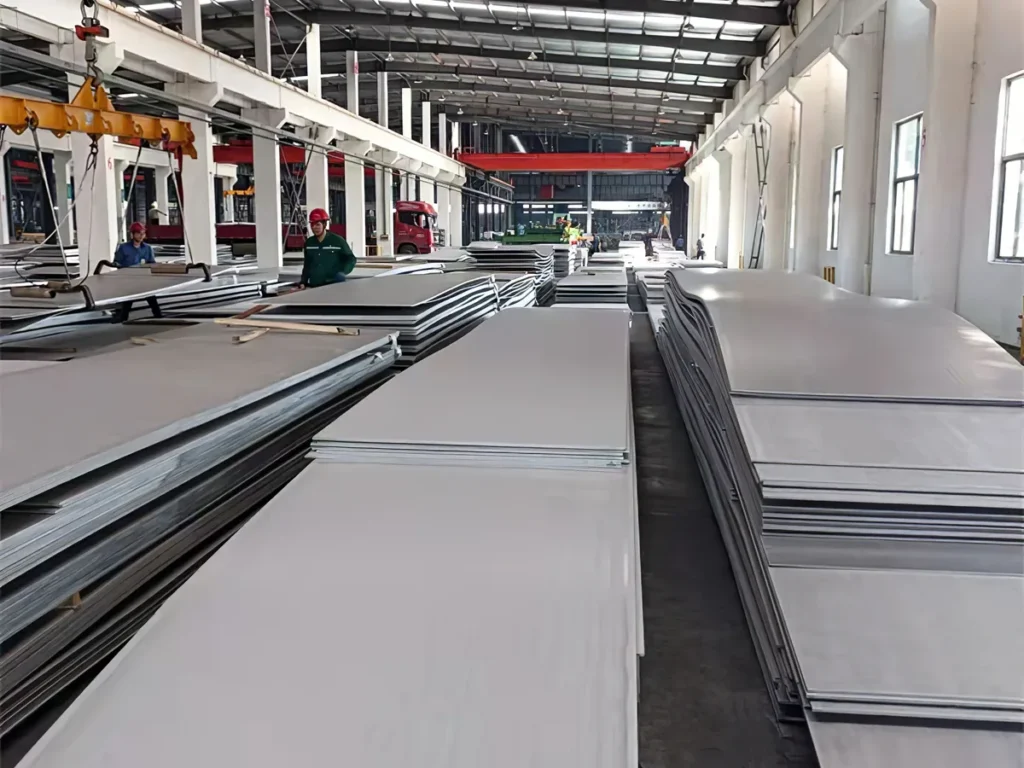
We process up to 100,000 tons a month and hold 4,500 tons of stainless sheet and plate (out of 80,000 tons in total) in our Wuxi warehouses, which cover 60,000 m². Our own cranes load each container for Shanghai, Qingdao or Tianjin.
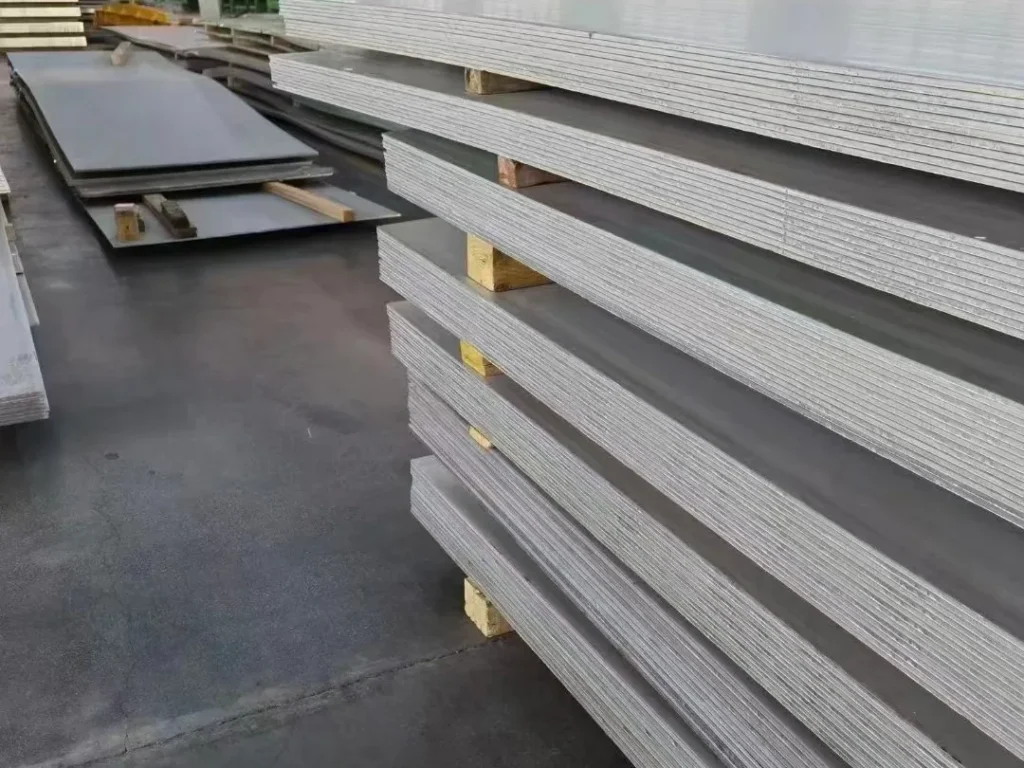
316 Plate for Chemical and Pharmaceutical Equipment
Request a Quote316 Stainless Steel Plate Types
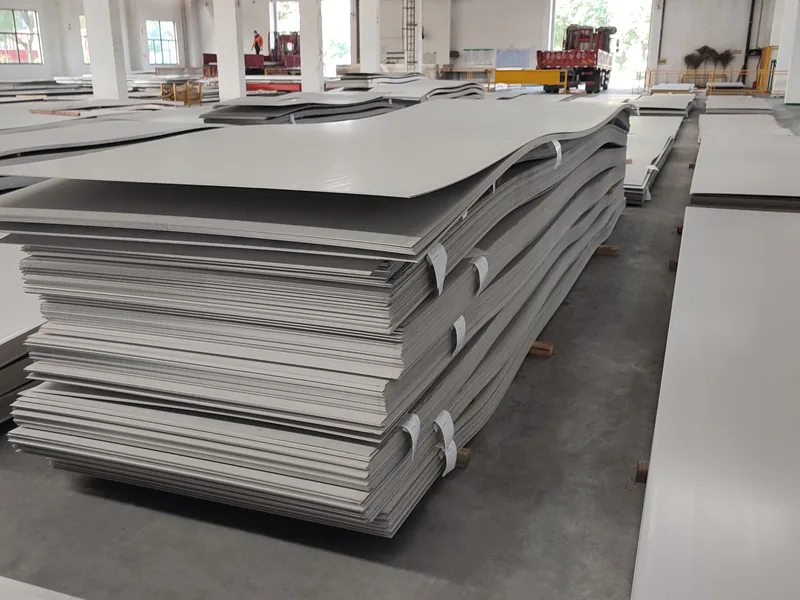
316/316L Dual-Certified Plate
The standard choice for welded vessels and tanks. Low carbon for weld zones, with 316 strength values. Example: 316/316L plate, 12mm, 2000×6000mm.
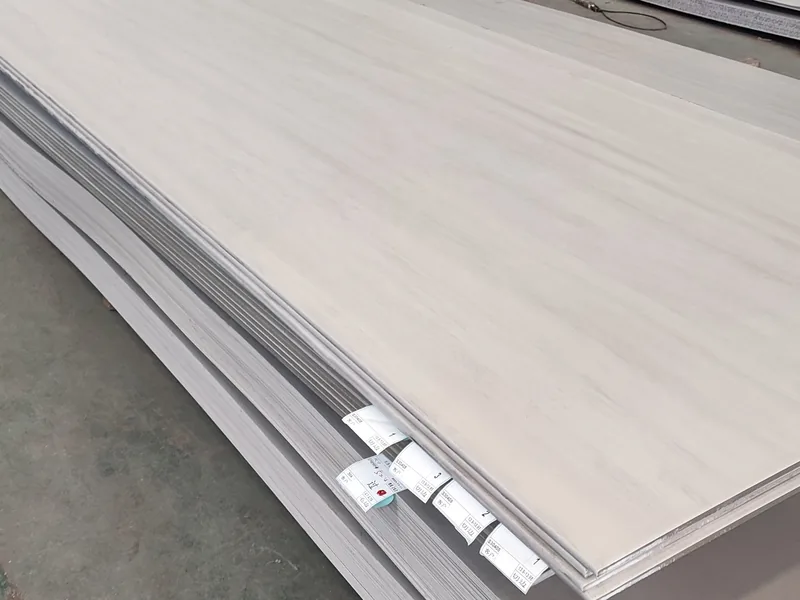
316L Plate
Low-carbon plate where the drawing names 316L only, such as many pharmaceutical and food projects. Supplied to EN 1.4404 or ASTM A240.
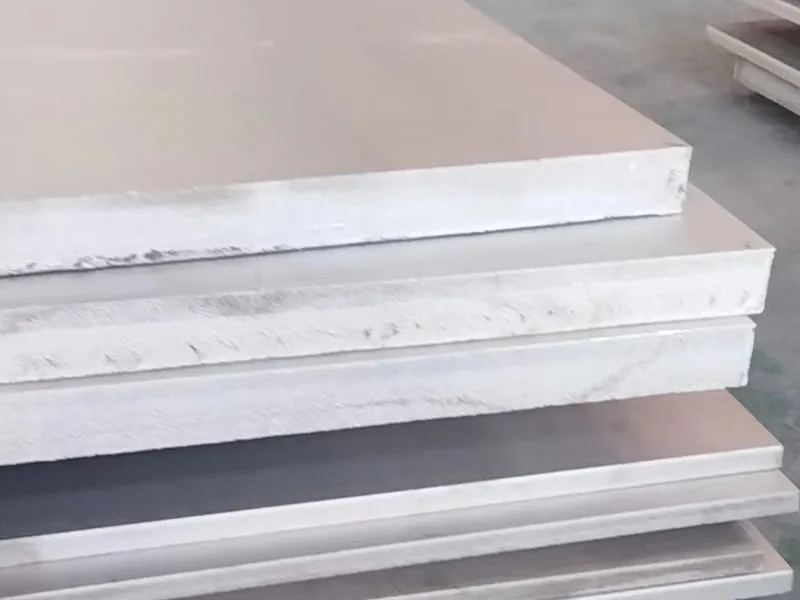
316Ti Plate
Titanium-stabilized 316, EN 1.4571. Popular in Europe for chemical vessels and parts that are heated after welding.
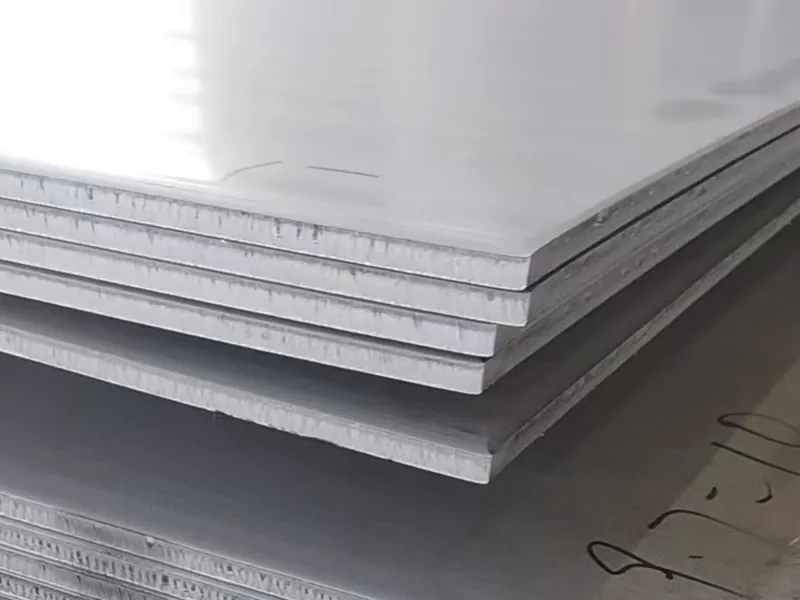
316 Cut Parts and Head Blanks
Round blanks for dished heads, flanges, tube sheets and nozzle plates, cut by fiber laser up to 10mm and by plasma or waterjet on thicker plate.
Need thinner gauges or a 2B finish? See our 316 Stainless Steel Sheet.
316 Plate Specifications
Specifying 316 Plate for Corrosion-Critical Equipment
When you order 316 plate for a chemical tank or a heat exchanger, the grade name is only the start. The plate's condition, the tests you require and how you weld it decide how long the equipment lasts. Here is what to put on your purchase order.
Pick the Right 316 Variant
Tests to Name on Your Purchase Order
Welding 316 Plate Without Losing Corrosion Resistance
316L or Duplex 2205 for Hot Chlorides
What Sets the 316 SS Plate Price
Frequently Asked Questions
What is the 316 SS plate price per ton?
The price depends on thickness, plate size, quantity, testing and current nickel and molybdenum prices. 316 plate costs more than 304 plate, and the gap moves with molybdenum. Send us your sizes, tonnage and test requirements. We will quote a current price per ton or per kg within 2–4 working hours.
Why does the SS316 plate price change so often?
316 contains nickel and molybdenum, two metals with volatile prices. Mills add an alloy surcharge that they update monthly or even weekly. That is why our 316 plate quotes are valid for 3 days. Confirm your order in that window to lock the price.
Is 316 or 316L plate better for a chemical tank?
For a welded chemical tank, choose 316L or 316/316L dual-certified plate. Low carbon keeps the weld zones resistant to intergranular corrosion. Plain 316 with higher carbon is better kept for bolted or unwelded parts.
Can 316 stainless steel plate be used in seawater?
316 plate works well in splash zones and for parts washed by seawater. For fully submerged parts in still seawater, it can suffer crevice corrosion. For immersed or warm seawater service, consider duplex 2205 or super duplex.
Can you supply 316 plate with a 3.2 certificate?
Yes, we can arrange EN 10204 3.2 certificates witnessed by a third-party inspection body. Tell us which body your client accepts. Allow extra time for the inspector's visit and test witnessing.
Can I order 316 plate thinner than 6mm?
Yes. Our hot rolled cut-to-length plate starts at 3mm, with a No.1 finish. Below 3mm, or if you need a 2B or BA surface, order 316 sheet, cold rolled from 0.27mm. You can combine sheet and plate in one shipment with one set of documents.
Related Products
Request a Quote
We reply within 2–4 working hours with a price per ton, valid for 3 days.