
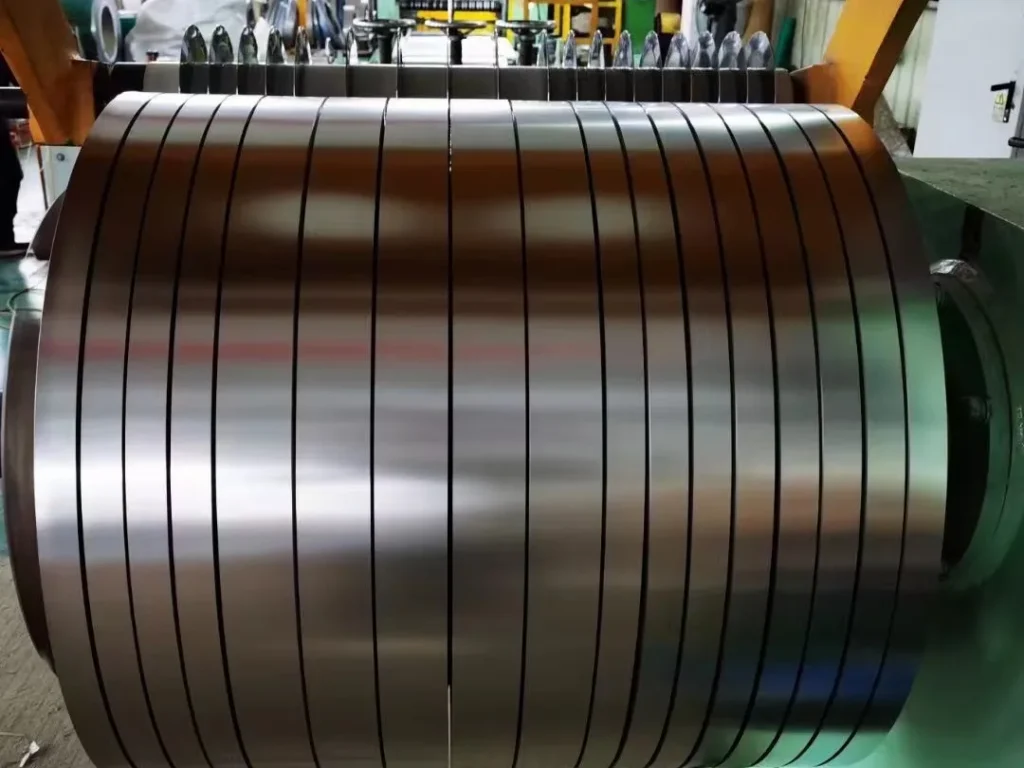
Spring Stainless Steel Strip
Cold rolled stainless strip in hard tempers for springs, clips and contacts. Grades 301, 304, 201, 316L and 17-7PH, from 0.1mm to 3.0mm thick and 20 to 600mm wide.

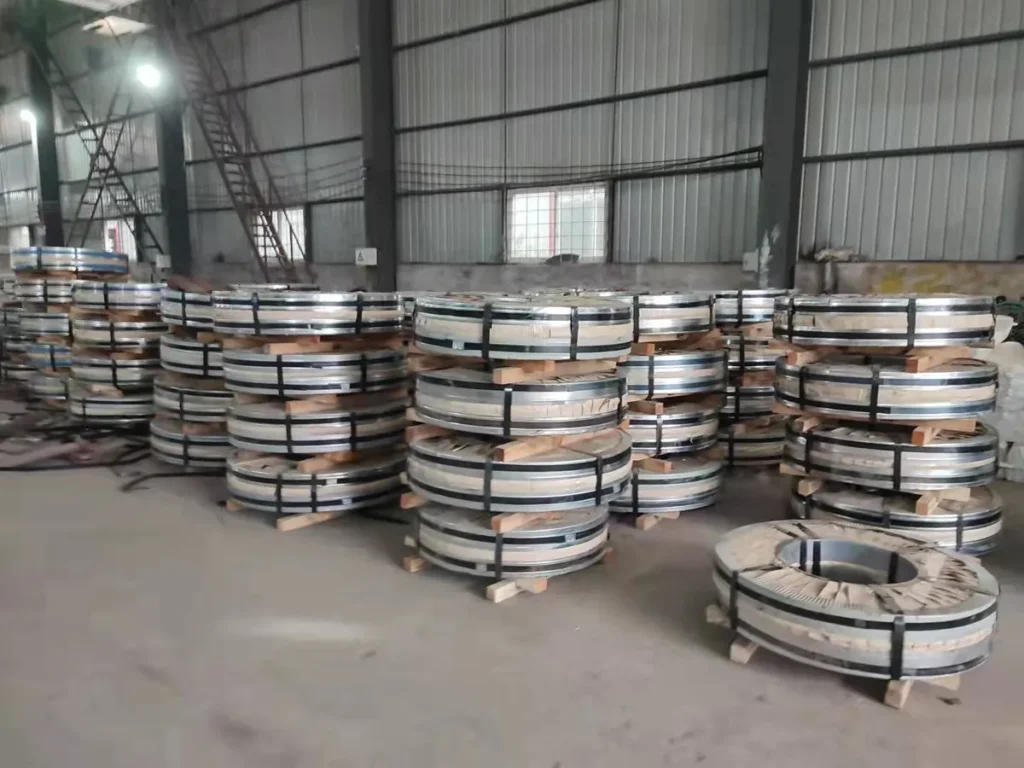
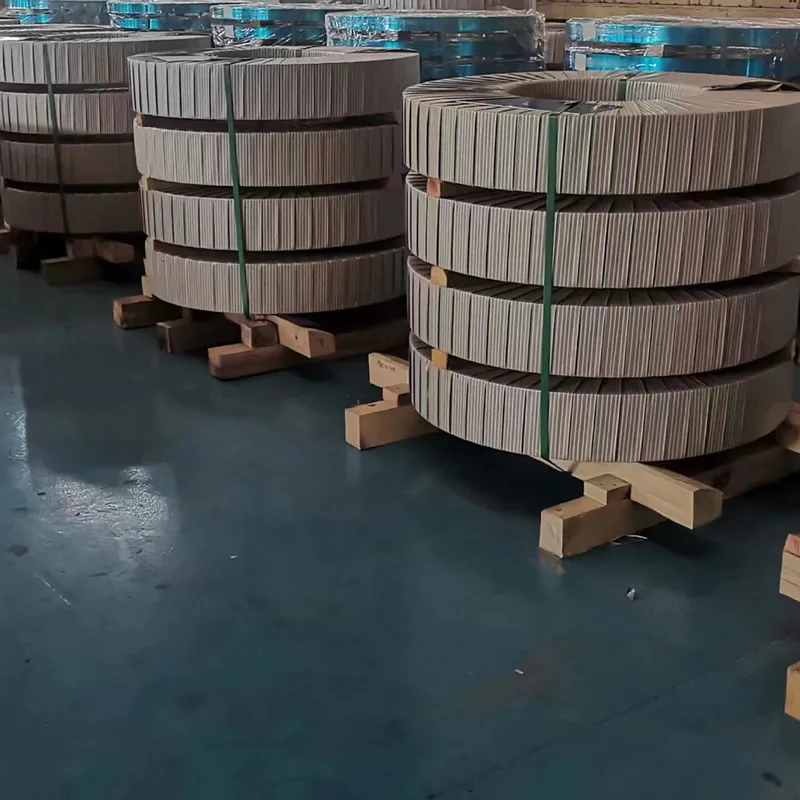
Cold rolling, annealing, slitting and recoiling in our own plant: widths 20–400mm, 508 or 610mm ID
Tempers 1/4H, 1/2H, 3/4H, full hard and extra hard, rolled to your tensile range on our own mills
Tensile, yield, elongation and hardness on every certificate; hardness spread within ±20 HV in one coil
0.1, 0.2, 0.3, 0.4, 0.5, 0.8, 1.0, 1.2 and 1.5mm in stock, in 1/4 hard, 1/2 hard and full hard
Why Buy Spring Strip From MTS
01
Rolled to a Tensile Range, Not Just a Temper Name
"Full hard" covers a wide band. We roll to the tensile range on your drawing, not just the temper name. Your springs then give the same force from coil to coil.
02
Bend Tested Before Shipping
Each lot is bend tested at the radius you specify. You find out about cracking before the strip ships, not on your press.
03
Flat and Low in Residual Stress
Hard strip that is not leveled curls when you stamp it. We tension level spring strip to keep parts flat after blanking.
04
Help With Heat Treatment
We tell you the stress-relief temperature that suits your grade and temper. That can raise the spring limit of your finished parts.
05
Slit in Our Plant, Shipped in 8–12 Days
Our 10 slitting lines cut spring strip to your width, and our recoiling lines set coil weight and ID. Orders from stock ship in 8–12 working days, loaded by our own cranes.
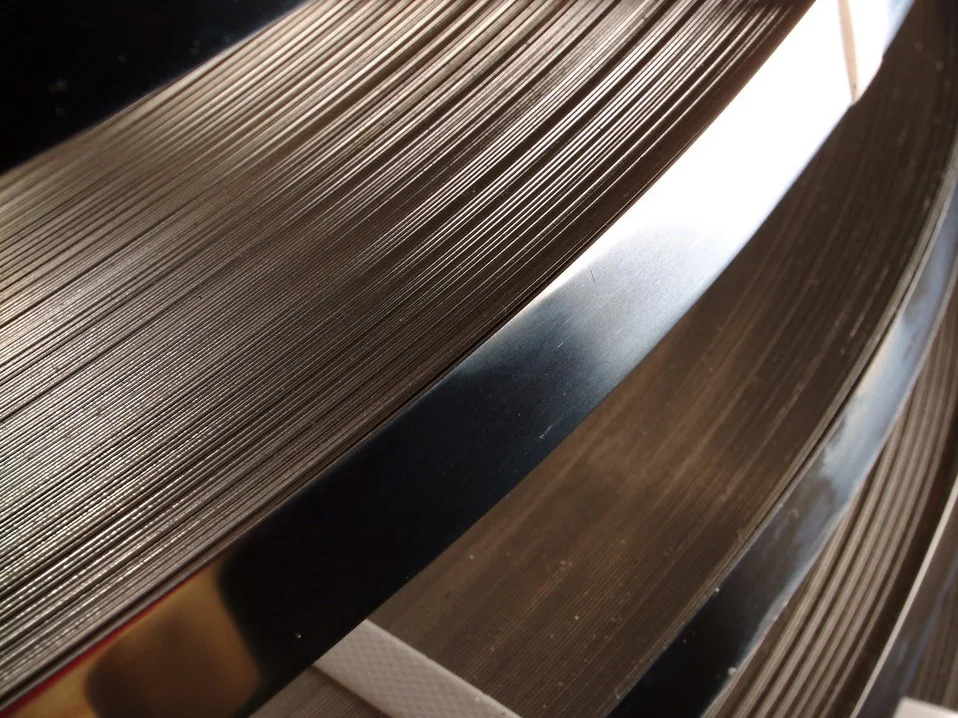
How Stainless Strip Becomes a Spring
Request a QuoteSpring Strip by Grade
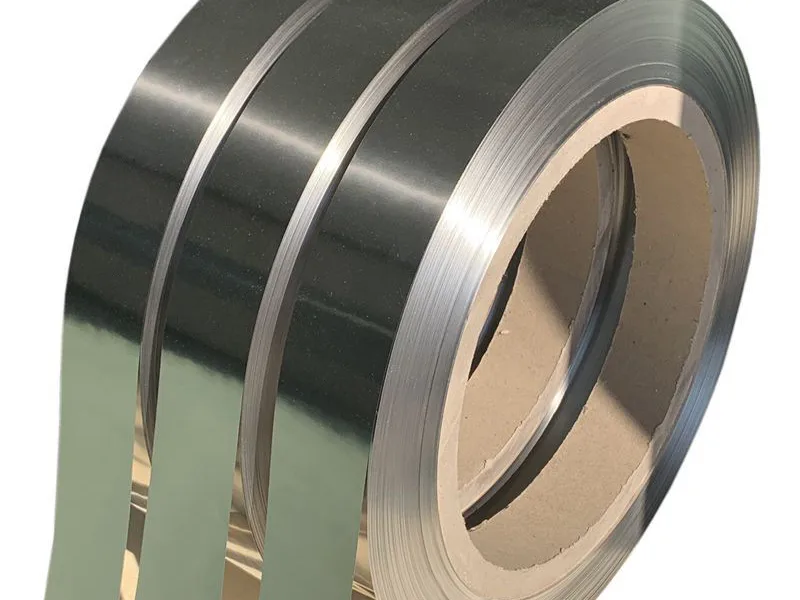
301 Stainless Steel Strip
The standard spring grade, also known as 1.4310 or SUS301. Supplied from 1/4 hard to extra hard. Used for clips, contacts, flat springs, and tape measure blades. Example: 301 full hard, 0.3mm × 25mm, in coil.
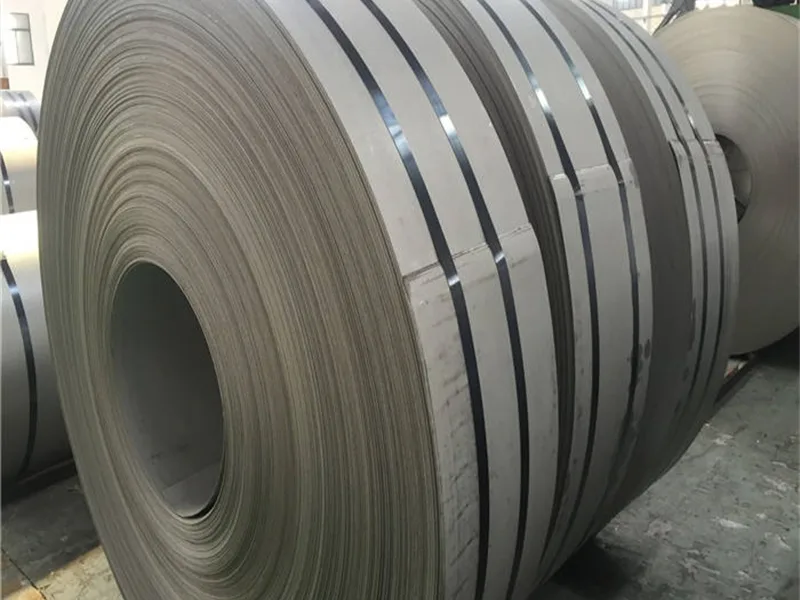
304 Hard Rolled Strip
Lower spring strength than 301 at the same temper, but better corrosion resistance and weldability. Used for light springs, washers and clamps that are welded.
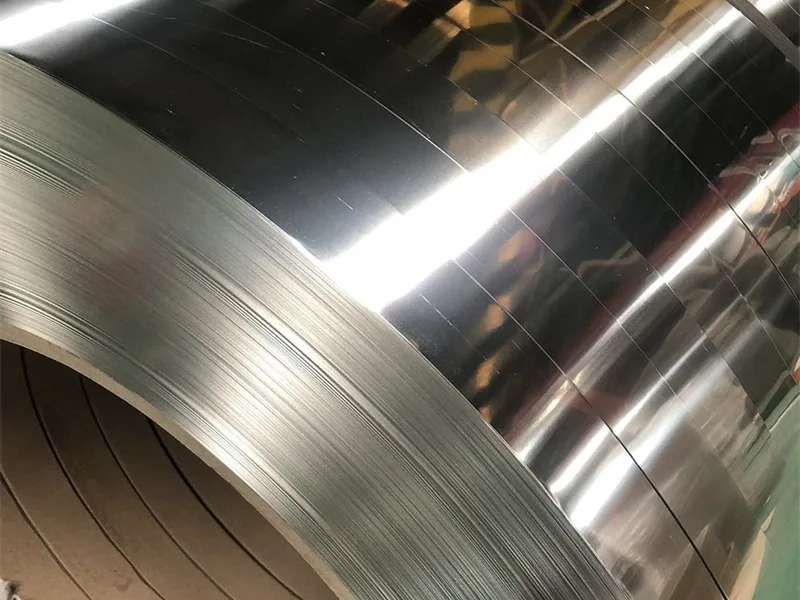
201 Hard Rolled Strip
A low-nickel grade with manganese, rolled from 1/4 hard to full hard. A cost-saving choice for indoor clips, furniture springs and household parts. Not for wet or coastal service.
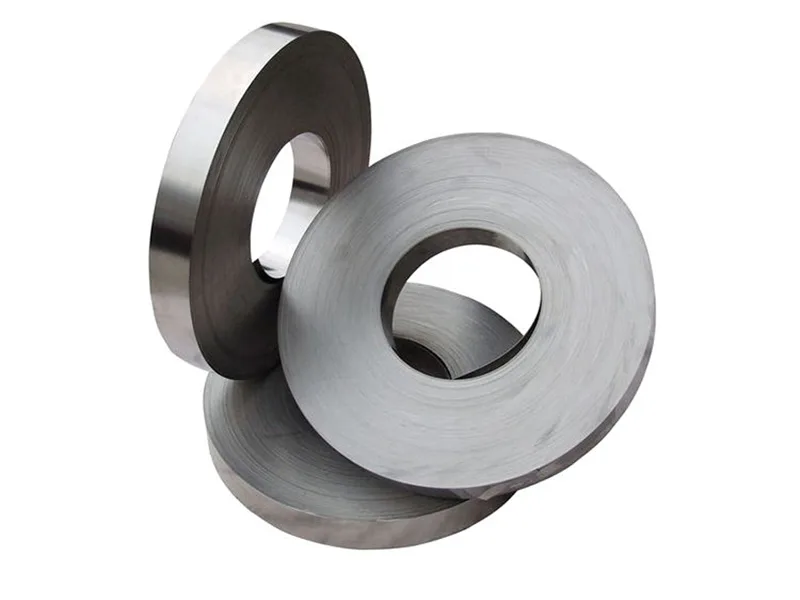
316L Spring Strip
Adds molybdenum for salt, chlorides and food or medical contact. Lower spring strength than 301, so it suits light springs, clips and gaskets that must resist corrosion.
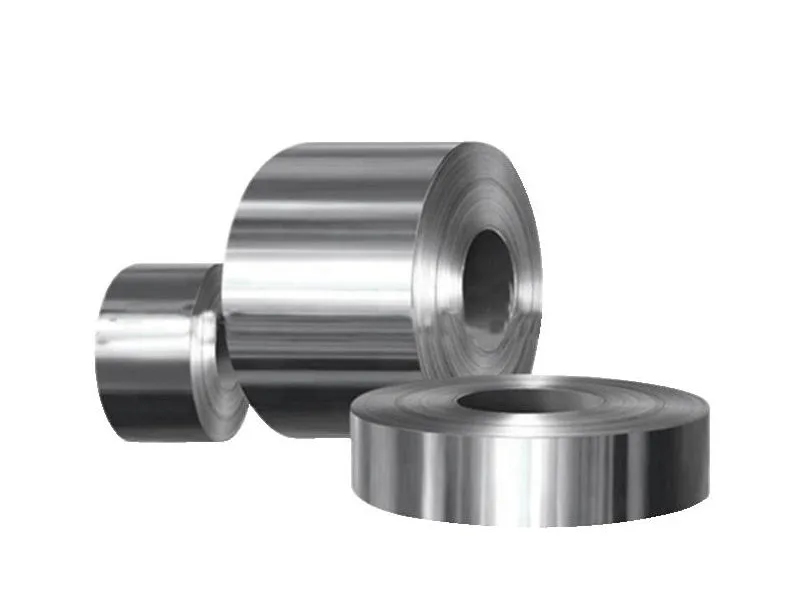
17-7PH (631) Spring Strip
A precipitation-hardening grade. You form it in the softer condition, then age it to very high strength. Used for high-load springs, aerospace clips and parts that see heat.
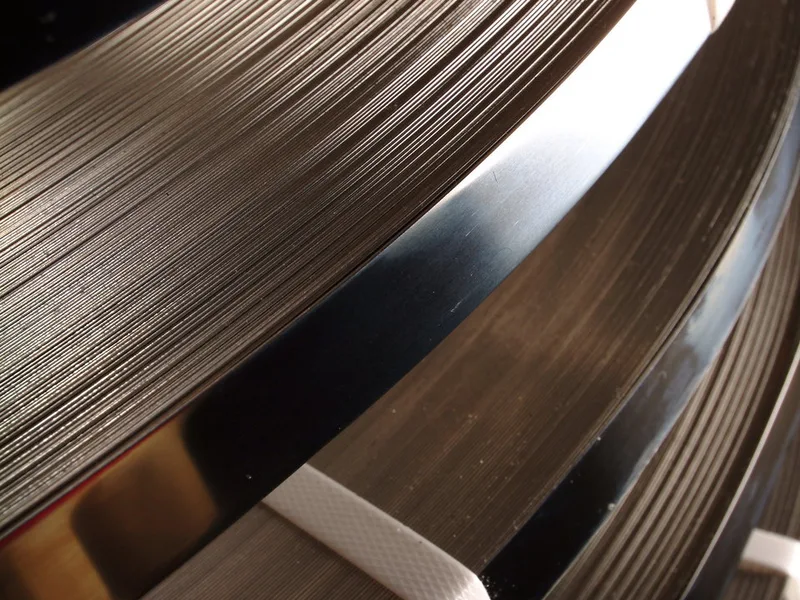
420 Hardened Strip
A martensitic grade supplied annealed or hardened and tempered. Used for blade springs, wear strips and cutting edges that need spring and hardness together.
Spring Strip by Thickness
0.1–1.5mm: Stock Gauges
Our main range for flat springs, battery contacts, clips and precision springs. 0.1, 0.2, 0.3, 0.4, 0.5, 0.8, 1.0, 1.2 and 1.5mm are held in stock, in 1/4 hard, 1/2 hard and full hard.
1.5–3.0mm: Heavy Gauge Spring Strip
Thicker spring strip for heavy clips, clamps and load springs, produced to order on a scheduled run. Full hard gets harder to reach as the gauge goes up, so give us your tensile range early.
Spring Strip by Temper
1/4 Hard and 1/2 Hard
Moderate strength with good bendability. For clamps, brackets and parts with tight bends that still need to hold shape.
3/4 Hard
The usual temper for flat springs and clips. A balance between spring force and forming.
Full Hard and Extra Hard
Highest strength, for flat springs and contacts with gentle bends. Check the bend radius before choosing these tempers.
Spring Strip Specifications
Choosing Spring Stainless Steel Strip: Temper, Bend and Heat Treatment
Most spring strip problems trace back to one choice: temper. Too soft, and the spring loses force. Too hard, and it cracks in the bend. Here is how to get it right.
Start From the Force, Then Check the Bend
Bend Direction Matters
Stress Relief After Forming
Magnetism in Hard Strip
When Spring Stainless Strip Is Not the Right Choice
Frequently Asked Questions
What is the difference between 301 and 304 spring strip?
301 has less nickel, so it work-hardens faster when rolled. At the same temper, 301 is stronger and springier. 304 has slightly better corrosion resistance and welds more easily. For most springs, choose 301. For light, welded spring parts, 304 hard strip is fine.
Can spring stainless steel strip be heat treated after forming?
Yes. A low-temperature stress relief raises the spring limit of 301 and 304 parts. It does not make them harder in the way quenching hardens carbon steel. Full annealing would remove the spring temper, so keep the temperature low.
How do I know which temper to order?
Give us the spring force, the material thickness and your tightest bend radius. We will suggest the temper and tensile range. If you are replacing a part, send a sample. We can test its hardness and match it.
Can you supply 301 stainless steel strip in very thin gauges?
Yes, down to 0.1mm in 1/4 hard, 1/2 hard and full hard, and 0.1mm and 0.2mm are stock gauges. Thin spring strip needs tighter thickness control, because force changes with thickness cubed. See our thin strip range for more on tolerances.
Is full hard stainless strip harder to stamp?
Yes. It wears dies faster and needs more press force. It also springs back more after bending, so allow for overbend. Many stampers use 3/4 hard where full hard is not essential.
Related Products
Request a Quote
We reply within 2–4 working hours with a price per ton, valid for 3 days.